Arthur’s childhood, decades before the pandemic
Island Childhood
[Arthur Leander](entity:character-recall-character-arthur-leander-e1c25b2dd3fa) grew up on [Delano Island](entity:location-recall-location-delano-island-45343c2b582d), a small, beautiful place of forests, rain, beaches, and a deep lake. He loved its familiar landscape but felt trapped by its smallness and dreamed of leaving.
His childhood friend [Victoria](entity:character-recall-character-3fe32232ab0e) shared that world with him. Arthur’s memories of his parents, younger brother, and island home would remain a private counterweight to the fame and movement of his later life.
Arthur at seventeen
Leaving the Island
Arthur left [Delano Island](entity:location-recall-location-delano-island-45343c2b582d) for the University of [Toronto](entity:location-recall-location-toronto-64d205cf39d7), ostensibly to study economics. He soon realized that the city, rather than school, was the point of his escape, and he abandoned his studies to pursue acting.
His parents were distressed, but early acting work and classes gave him a direction. The choice began the long passage from an isolated island childhood into a public life he could never fully control.
Arthur and Clark at eighteen and nineteen
Arthur and Clark
In [Toronto](entity:location-recall-location-toronto-64d205cf39d7), Arthur met [Clark Thompson](entity:character-recall-character-clark-thompson-e17acac0221f) in acting class. The two became inseparable, spending nights out together and sharing the uncertain, exhilarating years before either man had settled into adulthood.
Clark saw Arthur’s kindness and promise before celebrity transformed their friendship. Their early closeness would later stand in sharp contrast to the distance created by fame, work, and the lives they built apart.
Arthur’s first years in Toronto
The First Letters
Arthur began writing letters to [Victoria](entity:character-recall-character-3fe32232ab0e) from [Toronto](entity:location-recall-location-toronto-64d205cf39d7), describing the cold, his acting classes, his loneliness, and the city he both loved and resented. Victoria answered rarely, but Arthur continued writing as if she were a trusted witness to his life.
The letters preserved details he might otherwise have lost: his first ambitions, friendships, and doubts. Years later, their publication would expose an intimate version of Arthur that the celebrity record could not contain.
Arthur’s twenties
A Career Takes Shape
Arthur trained in [New York City](entity:location-recall-location-new-york-city-65df0a129d4c), worked as a waiter, and gradually collected television roles, commercials, and film parts. A move to [Los Angeles](entity:location-recall-location-los-angeles-11eff639bdf5) brought parties, success, and the beginnings of the fame he had once wanted.
As his career accelerated, he became less certain whether his relationships and decisions were personal or strategic. The attention that helped make him successful also began to make ordinary privacy impossible.
Miranda at seventeen
Miranda’s New Life
[Miranda Carroll](entity:character-recall-character-miranda-carroll-cbc814ef57b0) left [Delano Island](entity:location-recall-location-delano-island-45343c2b582d) for art school in [Toronto](entity:location-recall-location-toronto-64d205cf39d7), where the anonymity of city life felt like freedom. She began a relationship with [Pablo](entity:character-recall-character-pablo-ae43f39c6dd1), an aspiring painter whose prospects soon faltered, and took a job at [Neptune Logistics](entity:organization-recall-organization-neptune-logistic-580008fd6d25) to support them.
The company’s orderly office gave [Miranda](entity:character-recall-character-miranda-e73e6a842c34) calm and space to work on her private graphic-novel project. Its imagined world, [Station Eleven](entity:location-recall-location-station-eleven-d87f316017c7), grew alongside a life in which she increasingly felt confined by Pablo and the expectations surrounding her.
Miranda at seventeen and Arthur at twenty-nine
The First Meeting
Arthur’s mother arranged a lunch between him and [Miranda](entity:character-recall-character-miranda-e73e6a842c34), a younger islander newly arrived in [Toronto](entity:location-recall-location-toronto-64d205cf39d7). They spoke about their backgrounds and ambitions, and Arthur was struck by the rare relief of meeting someone who understood where he came from.
Nothing began between them then. Arthur returned to his career and Miranda to her own life, but the encounter established a connection that would resurface years later when both were in need of escape.
Several years after their first meeting
Miranda Leaves Pablo
As [Miranda](entity:character-recall-character-miranda-e73e6a842c34)’s relationship with [Pablo](entity:character-recall-character-pablo-ae43f39c6dd1) deteriorated, he questioned her job and monitored whether she was really at work. She recognized that she no longer wanted to return to their apartment or keep defending the life she had built there.
When Arthur called and invited her to dinner, Miranda accepted without telling Pablo. After their evening together, she left the apartment with suitcases and art supplies, choosing a new life and the chance to continue [Station Eleven](entity:location-recall-location-station-eleven-d87f316017c7) on her own terms.
Miranda and Arthur’s early relationship
A Marriage Begins
Arthur welcomed [Miranda](entity:character-recall-character-miranda-e73e6a842c34) into his hotel life, and their relationship quickly became a shared future. She moved with him to [Los Angeles](entity:location-recall-location-los-angeles-11eff639bdf5), where the celebrity world felt alien and isolating even as Arthur’s career grew.
Miranda continued drawing [Station Eleven](entity:location-recall-location-station-eleven-d87f316017c7), often in hotel rooms and private corners. The work became a durable source of identity as she struggled to find her place in Arthur’s glamorous, carefully watched life.
Three years into Arthur and Miranda’s marriage
The Hollywood Anniversary
At a dinner party celebrating their anniversary and a film’s success, [Miranda](entity:character-recall-character-miranda-e73e6a842c34) watched Arthur avoid her gaze and flirt with [Elizabeth Colton](entity:character-recall-character-elizabeth-colton-17a2f2fd3e6d). The evening made plain that the marriage had become a performance in which Miranda was increasingly peripheral.
She slipped outside, where Clark joined her and quietly acknowledged the painful scene inside. Miranda understood that the life she and Arthur had built was ending, even before either of them said so aloud.
The night of the Hollywood anniversary party
Miranda Keeps the Paperweight
After the guests left, [Miranda](entity:character-recall-character-miranda-e73e6a842c34) found a glass paperweight in Arthur’s study, a gift Clark had brought to their house. She carried it to her own studio, telling herself she wanted to sketch it, though she sensed she would keep it.
She and Elizabeth shared a quiet, uneasy conversation among Miranda’s drawings. Miranda later left Arthur, returned to [Toronto](entity:location-recall-location-toronto-64d205cf39d7), and rebuilt her life and career; the paperweight remained a small remnant of the marriage she had left behind.
The years after her divorce
Miranda Builds Her Career
Back at [Neptune Logistics](entity:organization-recall-organization-neptune-logistic-580008fd6d25), [Miranda](entity:character-recall-character-miranda-e73e6a842c34) advanced from assistant work into a demanding international career under [Leon Prevant](entity:character-recall-character-leon-prevant-fbe219ffa092). She travelled constantly and became increasingly self-sufficient, while continuing to draw [Station Eleven](entity:location-recall-location-station-eleven-d87f316017c7) in hotel rooms.
She came to regard clothing and competence as forms of armor. Her professional life offered real freedom, though it did not eliminate loneliness or her continuing connection to Arthur’s past.
The years after Miranda and Arthur’s divorce
Arthur’s Other Marriages
Arthur married [Elizabeth Colton](entity:character-recall-character-elizabeth-colton-17a2f2fd3e6d), and they had a son, [Tyler Leander](entity:character-recall-character-tyler-leander-49fecf5869f1), who eventually lived with Elizabeth in [Jerusalem](entity:location-recall-location-jerusalem-8e4409a0f555). Their marriage ended, and Arthur later married Lydia Marks, whose relationship with him also failed.
Arthur’s repeated departures left him with a growing sense of regret. He remained attached to Tyler while struggling to maintain a meaningful relationship with his son across distance and the demands of his career.
Seven years before the pandemic
The Secret Breakup
[Jeevan Chaudhary](entity:character-recall-character-jeevan-chaudhary-17b57ed531ba), then moving from paparazzi photography toward entertainment journalism, interviewed Arthur in [Los Angeles](entity:location-recall-location-los-angeles-11eff639bdf5). Arthur was tired of public performance and asked Jeevan for a day of secrecy before disclosing that he planned to leave Elizabeth for Lydia Marks.
Jeevan kept his promise and waited the agreed twenty-four hours before telling anyone. The encounter revealed both Arthur’s reliance on media attention and Jeevan’s desire to find work that felt more honest than stalking celebrities.
Three weeks before the pandemic
Dear V. Is Published
Arthur learned that [Victoria](entity:character-recall-character-3fe32232ab0e)’s collected letters would be published as [Dear V.: An Unauthorized Portrait of Arthur Leander](entity:object-recall-object-dear-v-an-unauthorized-b433171c73e3). He worried that the book would reveal private details about his marriages and friendships, including his relationship with [Miranda](entity:character-recall-character-miranda-e73e6a842c34).
Clark and Elizabeth were also alarmed by the forthcoming book. The letters exposed Arthur’s habit of treating Victoria as a diary, a private audience whose presence he had gradually stopped imagining.
Two weeks before Arthur’s death
A Final Reunion
After his father died, Arthur called [Miranda](entity:character-recall-character-miranda-e73e6a842c34) because she was one of the few people who knew the island he came from. They met in his dressing room at the [Elgin Theatre](entity:location-recall-location-elgin-theatre-9fe62ca529e0), where they spoke about his father, their changed lives, and the impending publication of Dear V.
[Kirsten Raymonde](entity:character-recall-character-kirsten-raymonde-ddb01ba7c842) visited Arthur during their conversation. Miranda gave Arthur copies of her first two [Dr. Eleven comics](entity:object-recall-object-dr-eleven-comics-3d0acdb8f165), and he later passed another set to Tyler. The meeting briefly reunited the people and objects that would be scattered by the coming catastrophe.
Two weeks before the pandemic
The Paperweight Returns
After the reunion, [Miranda](entity:character-recall-character-miranda-e73e6a842c34) realized she still had the glass paperweight from Arthur’s house. She arranged to have it delivered to the theatre, correcting a small act of taking that had lasted for years.
Arthur gave the paperweight to [Tanya](entity:character-recall-character-tanya-ee245c438564), the young woman who cared for the child actors and had become his lover. The object would pass from Tanya to Kirsten on the night the old world ended.
Two weeks before the pandemic
Miranda’s Last Beach
In [Malaysia](entity:location-recall-location-malaysia-9044e73e466b), [Miranda](entity:character-recall-character-miranda-e73e6a842c34) stood on a beach looking at the illuminated container fleet off [Singapore Harbour](entity:location-recall-location-e44d7139d374). She received Clark’s call informing her that Arthur had died, and she remained on the beach with the news and the strange beauty of the ships.
Already ill with the [Georgia Flu](entity:concept-recall-concept-georgia-flu-004f5c84111d), Miranda tried to find a way out of the country. When her fever worsened and the hotel emptied, she made her way back to the beach and died watching sunrise over the ships.
Day One in Toronto
Arthur’s Last Morning
Arthur woke exhausted and dehydrated, but continued through the ordinary rituals of breakfast, coffee, and the trip to the theatre. He had decided that after King Lear closed he would move to [Jerusalem](entity:location-recall-location-jerusalem-8e4409a0f555), live near Elizabeth, and see Tyler every day.
His plans represented a late attempt to shed possessions and repair what he had neglected. On this final day, he was still imagining that a different life remained within reach.
Late afternoon on Day One in Toronto
Arthur Gives Tanya a Gift
At the theatre, Arthur met [Tanya](entity:character-recall-character-tanya-ee245c438564), apologized for missing breakfast, and gave her a copy of [Miranda](entity:character-recall-character-miranda-e73e6a842c34)’s comic. He then promised to pay off her student loans, hoping to use his wealth for something generous and to begin a simpler life.
Before the performance, he called Tyler in [Jerusalem](entity:location-recall-location-jerusalem-8e4409a0f555). Their conversation began awkwardly, but Tyler described [Dr. Eleven](entity:character-recall-character-0055244e96ba) and the [Undersea](entity:location-recall-location-undersea-291c96ea8434), allowing father and son a rare moment of connection before Arthur went onstage.
Evening of Day One in Toronto
The Final Performance
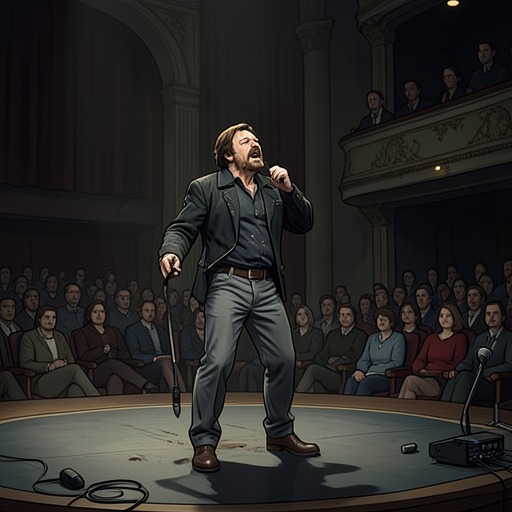
During the fourth act of King Lear, Arthur faltered, struck his hand against a pillar, and began speaking the wrong lines. Jeevan, seated in the audience, recognized that the actor was in medical distress and forced his way onto the stage.
Arthur collapsed beneath the falling stage snow. The moment joined his final performance to the play’s imagined storm and brought together Jeevan, Kirsten, and the actors in a scene that would remain central to their memories.
Minutes after Arthur collapses
Jeevan Attempts CPR
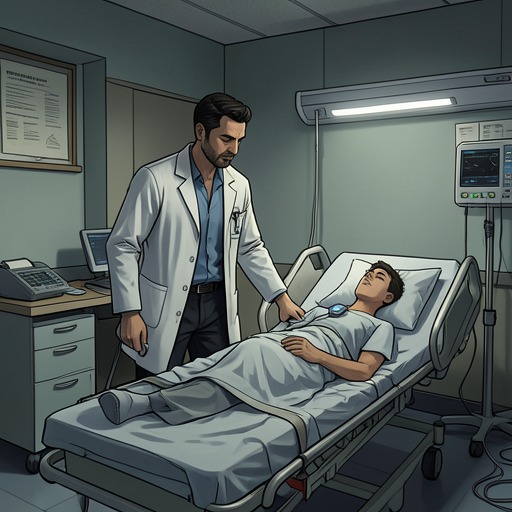
Jeevan began CPR while the curtain fell and the audience was shut away from the stage. Cardiologist Walter Jacobi joined him, and medics soon took over, but Arthur could not be revived.
Jeevan then sat with Kirsten, who was frightened and confused, and tried to explain that Arthur had been doing what he loved. When [Tanya](entity:character-recall-character-tanya-ee245c438564) arrived to collect the child, Kirsten left with her, carrying the memory of the man who had given her the comics.
Later on Day One in Toronto
Jeevan Leaves the Theatre
Outside the theatre, paparazzi pressed Jeevan for details about Arthur. He withheld what he knew and walked north through the snow, feeling unexpectedly alive after trying to save someone and realizing that emergency medicine might be the work he wanted.
A text from Laura asking him to pick up milk ended that brief exhilaration. Hurt by her absence and their strained relationship, he entered [Allan Gardens](entity:location-recall-location-allan-gardens-5a77ef05cc34) alone before [Hua](entity:character-recall-character-hua-38496381a248) called with a warning about a rapidly spreading flu.
Night of Day One in Toronto
Hua Warns Jeevan
[Hua](entity:character-recall-character-hua-38496381a248) told Jeevan that [Toronto General Hospital](entity:location-recall-location-toronto-general-hosp-8ef2a6afdd42) was overwhelmed by patients from a flight out of [Moscow](entity:location-recall-location-19aceb5ce281) and that a hospital worker had fallen ill within hours of exposure. Deaths were mounting, and the emergency department was running out of staff and space.
Hua urged Jeevan to leave the city or shelter at home. The warning shifted Jeevan’s attention from Arthur’s death toward a disaster that was already spreading through the people and systems around him.
Late night on Day One in Toronto
Jeevan Stocks Supplies
After seeing news that local hospitals were in isolation and Health Canada had confirmed an outbreak, Jeevan filled shopping carts with water, food, medicine, and basic supplies. He made repeated trips through the closing grocery store despite the clerk’s growing alarm.
Jeevan called Laura and urged her to leave [Toronto](entity:location-recall-location-toronto-64d205cf39d7), but she doubted the warning and the conversation became an argument. He pushed the supplies through the snow to [Frank](entity:character-recall-character-frank-aae9eaa69e27)’s apartment, convinced that there was little time to prepare.
After midnight on Day Two in Toronto
Jeevan Reaches Frank
Jeevan arrived at [Frank](entity:character-recall-character-frank-aae9eaa69e27)’s apartment with carts of supplies and explained that the flu was spreading rapidly. Frank, a wheelchair user and former war correspondent, accepted his brother’s unexpected arrival without pretending to know what would happen next.
The brothers began sheltering together as the city outside filled with fear and uncertainty. Jeevan’s preparations bought them time, but they could not preserve the infrastructure on which the apartment depended.
Days One through Seven after the outbreak reaches Toronto
The Pandemic Spreads
The [Georgia Flu](entity:concept-recall-concept-georgia-flu-004f5c84111d) spread with extraordinary speed, killing patients and medical workers while hospitals and emergency services collapsed. News reports turned increasingly desperate, then disappeared city by city as communications failed.
Jeevan and [Frank](entity:character-recall-character-frank-aae9eaa69e27) sealed vents, rationed supplies, and watched the roads clog with people trying to flee. The crisis was no longer a medical emergency alone: it was the failure of the human systems that had made modern life possible.
Around Day Thirty
The City Goes Dark
Electricity and running water failed in [Frank](entity:character-recall-character-frank-aae9eaa69e27)’s apartment building. Jeevan repeatedly tested the light switches, unable to accept that the outage might be permanent, while Frank continued working on a ghostwritten memoir.
Jeevan understood that the city was not impersonal machinery but a vast network of people whose absence stopped power, food, transport, and communication. The loss of electricity marked a decisive break between the world they had known and the one outside their windows.
Around Day Forty-Seven
Frank Chooses Death
As food dwindled and the city remained dangerous, [Frank](entity:character-recall-character-frank-aae9eaa69e27) told Jeevan that he could not face another life in a world defined by survival. He had thought carefully about the choice and did not want to leave the apartment or return to a life of conflict and uncertainty.
Jeevan understood that Frank intended to die, though he could not accept the decision. Frank’s choice left Jeevan with grief and the practical burden of deciding how to survive without his brother.
After Frank’s death, during the first winter
Jeevan Leaves Toronto
Jeevan remained with [Frank](entity:character-recall-character-frank-aae9eaa69e27) until he was sure his brother had died, then packed a backpack and left the apartment after dark. He carried a page from Frank’s manuscript that reflected on fame, memory, and the wish to be remembered.
The city had become silent and unlit, and Jeevan avoided roads and other people as he followed the lakeshore. Leaving [Toronto](entity:location-recall-location-toronto-64d205cf39d7) meant abandoning his old life, but also choosing to continue living.
The first weeks after the collapse
Kirsten and Peter Flee
Kirsten and her older brother Peter left [Toronto](entity:location-recall-location-toronto-64d205cf39d7) after the neighbourhood emptied and it became clear that their parents would not return. Peter hotwired an abandoned car, but traffic blocked the roads, forcing them to continue on foot.
They travelled east and south through a world without functioning borders or transport. Kirsten later remembered little of their first year on the road, while Peter’s memory of it remained a source of nightmares.
About five days after leaving Toronto
Jeevan Finds Companions
After days alone, Jeevan encountered Ben, Abdul, and Jenny travelling south along the shore. They shared food and stories, including the deaths of Ben’s family, before eventually separating when their routes diverged.
Jeevan continued alone, feeling both intensely alive and nearly erased by the vast landscape. His journey became a long effort to remain human in a world where familiar destinations and institutions had vanished.
Year Three
Jeevan Reaches McKinley
Jeevan eventually reached [McKinley](entity:location-recall-location-mckinley-09b2017cbf80), a settlement formed by people stranded at a corporate retreat when the pandemic swept through the region. He found a place among its residents and, over time, became a trusted healer after apprenticing with a local doctor.
The former paramedic had finally found work that mattered to him. Years later he married [Daria](entity:character-recall-character-daria-7db77fe5cc7f) and built a family, turning the calling he discovered on the night of Arthur’s death into a life of service.
Year Five after the collapse
The Symphony Forms
[The Conductor](entity:character-recall-character-4d1ffbd3e478) gathered former military musicians and led them out from their air base to perform in the scattered settlements. After months on the road, the orchestra encountered a company of Shakespearean actors who had fled [Chicago](entity:location-recall-location-73935e623d95) and joined them.
The combined Travelling Symphony moved between communities with music and plays. In a world reduced to isolated towns, the company created both a livelihood and a shared home for people who had few other ways to belong.
About five years after the collapse
Kirsten Joins the Symphony
After Peter died in [Ohio](entity:location-recall-location-4c66c89ead05), Kirsten was left alone in a town the Symphony visited. At fourteen, she joined the travelling company and found a place among its actors and musicians.
She carried the [Dr. Eleven comics](entity:object-recall-object-dr-eleven-comics-3d0acdb8f165) Arthur had given her and a paperweight from the theatre. Her memories of the old world were fragmentary, but the Symphony offered companionship, performance, and a reason to keep moving.
Kirsten at fifteen
The First Knife Tattoo
During her first year with the Symphony, a man attacked Kirsten on the road. She threw a knife and killed him before the troupe gathered around her.
The experience left her with a knife tattoo and an unsettling calm she could not explain. She began avoiding the memories of her first year on the road, suspecting that whatever she had experienced then was something she did not want to recover.
Two years after Kirsten’s first tattoo
The Second Knife Tattoo
Outside [Mackinaw City](entity:location-recall-location-mackinaw-city-139a26c23327), armed brigands demanded food, horses, and a woman from the Symphony. The company fought back, with Kirsten and the sixth guitar helping to kill the attackers before the troupe resumed its journey.
Kirsten marked the second killing with another knife tattoo. The company’s performances continued, but the weapons they carried showed how survival and art had become inseparable on the road.
By Kirsten’s adolescence
The Symphony’s Motto
[The Conductor](entity:character-recall-character-4d1ffbd3e478)’s lead caravan bore the words “[Because survival is insufficient](entity:expression-recall-expression-because-survival-i-338a7515c3e1),” a line Kirsten had also tattooed on her arm. [Dieter](entity:character-recall-character-dieter-fc1e578ddb39) objected that the words came from a television episode, but Kirsten held to them as a statement of what the troupe was trying to preserve.
The motto expressed the novel’s central distinction between mere endurance and a life containing art, beauty, and connection. The Symphony’s work was difficult and dangerous, but its members believed that performance gave their survival meaning.
Kirsten at sixteen
The Comics Become a Memory
While searching abandoned houses, Kirsten found a gossip magazine carrying a photograph of Arthur with his son. She recognized the actor who had given her the comics and began collecting every image and article about him she could find.
Her clipping collection became a personal archive of a life she barely remembered. Arthur remained to her a fleeting impression of kindness, the stage, and the gift of [Dr. Eleven](entity:character-recall-character-0055244e96ba)’s strange, beautiful world.
Year Twenty in late July
The Symphony Reaches St. Deborah
The Travelling Symphony arrived in [St. Deborah by the Water](entity:location-recall-location-st-deborah-by-the-wa-9a13df31c94d) after a punishing journey through intense summer heat. The town seemed strangely empty, and [Charlie Harrison](entity:character-recall-character-charlie-harrison-4542cdd50611) and [Jeremy Leung](entity:character-recall-character-jeremy-leung-2c9cd7c90ada), left there two years earlier, did not appear to greet them.
Kirsten was troubled by the absence of her friend and the town’s changed atmosphere. The company prepared to perform despite the lack of welcome, not yet understanding that a new power had taken control.
The afternoon of the Symphony’s arrival
Kirsten Searches for Charlie
Kirsten walked through town looking for [Charlie](entity:character-recall-character-charlie-24c3a7bd9408) and [Jeremy](entity:character-recall-character-jeremy-9ac2d6df3d50). A midwife told her that the couple had left more than a year earlier after Charlie rejected the Prophet’s advances, and warned Kirsten to stop asking questions and leave.
Kirsten also noticed grave markers bearing the names of Charlie, Jeremy, and their baby, Annabel, though the earth beneath them was undisturbed. The false graves suggested that the town’s new rulers used death as a threat against those who left.
After the Prophet’s arrival in St. Deborah
The Prophet’s Rule
[The Prophet](entity:character-recall-character-2284198530cc) and his followers had arrived as apparently peaceful travellers, then gained influence when a fever killed the town’s mayor and many residents. The Prophet moved into the gas station and took control, backed by followers whose weapons and methods had been concealed.
He preached that the [Georgia Flu](entity:concept-recall-concept-georgia-flu-004f5c84111d) was divine cleansing and that the survivors were the pure, chosen to carry the light. His theology turned catastrophe into a justification for coercion and violence.
The evening of the Symphony’s arrival
A Midsummer Performance
The Travelling Symphony performed A Midsummer Night’s Dream in the Walmart parking lot, with candles, costumes, and music. Kirsten played Titania opposite [Sayid](entity:character-recall-character-sayid-bb2795c1ceb4), her former lover, while the small audience watched in uneasy silence.
The performance briefly made beauty visible in a hostile place. When the Prophet addressed the crowd afterward, the company understood that the quiet town had become dangerous.
Immediately after the performance
The Prophet Demands Alexandra
[The Prophet](entity:character-recall-character-2284198530cc) praised the company and preached that the pandemic had been a divine flood that saved the worthy. In private, he asked the Conductor to leave [Alexandra](entity:character-recall-character-alexandra-d152cf4180a2) behind as a guarantee of future relations, explaining that he wanted another bride.
[The Conductor](entity:character-recall-character-4d1ffbd3e478) refused. The demand revealed the sexual violence concealed beneath the Prophet’s language of order and salvation, and made it impossible for the Symphony to remain in town.
The night the Symphony leaves St. Deborah
The Town Bars Departure
As the company departed, a young sentry told the Conductor that residents needed permission to leave. Those who went without permission were given funerals, and the sentry could not explain what would happen if they returned.
[The Conductor](entity:character-recall-character-4d1ffbd3e478) chose not to risk taking the boy, fearing that the Prophet could accuse the Symphony of kidnapping. The troupe escaped, recognizing that the town’s invented funerals were another instrument of control.
The day after the Symphony’s escape
Eleanor Hides in the Caravan
After travelling through the night, the Symphony discovered [Eleanor](entity:character-recall-character-ec293c68b669), a twelve-year-old stowaway hiding among the costumes. She said the Prophet had chosen her as his next wife and begged the company not to send her back.
Eleanor explained that [Charlie](entity:character-recall-character-charlie-24c3a7bd9408) had told her she could find the family at the [Museum of Civilization](entity:location-recall-location-museum-of-civilizati-4f65a430f50c) if she ever escaped. [The Conductor](entity:character-recall-character-4d1ffbd3e478) chose to protect her, breaking the troupe’s usual policy of non-intervention and setting them toward an unknown destination.
After Eleanor joins the troupe
The Symphony Chooses South
[The Conductor](entity:character-recall-character-4d1ffbd3e478) studied the map and weighed the risks of returning through St. Deborah, entering a hostile town, or crossing the dangerous interior. She decided to travel south along the shore toward the reported settlement at [Severn City Airport](entity:location-recall-location-severn-city-airport-2a398c4c5c66).
The choice served two purposes: it offered a chance to find [Charlie](entity:character-recall-character-charlie-24c3a7bd9408) and [Jeremy](entity:character-recall-character-jeremy-9ac2d6df3d50), and it gave [Eleanor](entity:character-recall-character-ec293c68b669) a route toward the people who might shelter her. It also led the troupe into territory where the Prophet’s followers could pursue them.
Two days after leaving St. Deborah
A Burned Resort
The Symphony crossed a resort town destroyed by fire, where flowers had grown through the ruins and the clock tower had stopped. Near an abandoned school, Kirsten and [August](entity:character-recall-character-august-3c55407d5a64) found wrecked classrooms, old graffiti, and a skeleton with a bullet hole in its skull.
The building offered fragments of the lives that had passed through it, but no clear account of their fate. Kirsten and August continued searching old places for evidence of the former world, even as the danger of such exploration grew.
Several days after leaving St. Deborah
Dieter and Sayid Disappear
During a night watch, Kirsten and [August](entity:character-recall-character-august-3c55407d5a64) heard a distant cry and went to investigate. By morning, [Dieter](entity:character-recall-character-dieter-fc1e578ddb39) and [Sayid](entity:character-recall-character-sayid-bb2795c1ceb4) had vanished without tracks or signs of a struggle, leaving the Symphony unable to understand whether they had been taken or had left.
Dieter had been Kirsten’s closest older friend, and Sayid was the man she had once loved. Their disappearance turned the company’s journey into a search while forcing the Conductor to consider the safety of everyone still present.
The day after Dieter and Sayid disappear
Sidney Vanishes
As the Symphony searched the forest, [Sidney](entity:character-recall-character-f8d246337a08) went with [Jackson](entity:character-recall-character-jackson-aa079ef98c23) to gather water. Jackson turned away briefly, and when he looked back she was gone; the woods had fallen silent, with no splash or other clue to explain her disappearance.
The repeated vanishings made the troupe fear that something was hunting them. They began to watch the forest and one another with new suspicion, unable to tell whether the threat came from outside or from the fear consuming their company.
During the search for the missing members
The Clarinet’s Note
The Symphony found a fragment in the clarinet’s belongings: a line about being immeasurably weary and going to rest in the forest. Some members read it as evidence of suicidal intent, while others believed it might have been an abandoned beginning for a play.
The note could not explain whether the clarinet had chosen to leave or had been taken. Its uncertainty deepened the company’s fear and forced them to confront how little they knew about one another’s private suffering.
The evening after the disappearances
The Separation Protocol
[The Conductor](entity:character-recall-character-4d1ffbd3e478) announced that the Symphony would continue toward its designated destination rather than risk the lives of the remaining members by staying in the forest. [Alexandra](entity:character-recall-character-alexandra-d152cf4180a2) recited the company’s rule: anyone separated on the road should go to the destination and wait.
The current destination was the [Museum of Civilization](entity:location-recall-location-museum-of-civilizati-4f65a430f50c) in [Severn City Airport](entity:location-recall-location-severn-city-airport-2a398c4c5c66). Kirsten and [August](entity:character-recall-character-august-3c55407d5a64) later found themselves separated from the main group, making the protocol their only reliable plan for reunion.
During a storm on the route to Severn City
The Symphony Is Separated
Kirsten and [August](entity:character-recall-character-august-3c55407d5a64) went ahead to fish while the Symphony cleared fallen trees from the road. A storm covered the area, and when the pair returned, the troupe had moved on without them, apparently taking a different route after receiving a warning from the escaped clarinet.
The cleared road and washed-away tracks left Kirsten and August unable to follow with certainty. They continued toward the airport alone, hoping the separation protocol would bring them together again.
During the Symphony’s search for a route to the airport
The Prophet’s Men Take Hostages
[The Prophet](entity:character-recall-character-2284198530cc)’s men captured [Sayid](entity:character-recall-character-sayid-bb2795c1ceb4) and the clarinet, intending to trade them for [Eleanor](entity:character-recall-character-ec293c68b669). [Dieter](entity:character-recall-character-dieter-fc1e578ddb39) did not wake after being drugged and died while Sayid watched, bound and unable to help him.
The clarinet listened to the men discuss their plan and learned how they had trained to attack silently. While Sayid distracted their captors, she freed herself and escaped through the forest, carrying a warning that the Symphony needed to change its route.
The morning after her escape
The Clarinet Warns the Symphony
Sick and exhausted, the clarinet reached the Symphony’s rear scouts and told them to change course. [The Conductor](entity:character-recall-character-4d1ffbd3e478) diverted the company onto a circuitous set of back roads toward [Severn City Airport](entity:location-recall-location-severn-city-airport-2a398c4c5c66).
The change protected the main group from the Prophet’s plan, but it also left Kirsten and [August](entity:character-recall-character-august-3c55407d5a64) on the original route. Their separation widened before either side could learn that the other was still alive.
Two days after their separation
Kirsten and August Meet Finn
Kirsten and [August](entity:character-recall-character-august-3c55407d5a64) reached a roadside station and met Finn, a guarded survivor living outside a town with two children. He confirmed that he had escaped St. Deborah after the Prophet took control and said [Charlie](entity:character-recall-character-charlie-24c3a7bd9408) and [Jeremy](entity:character-recall-character-jeremy-9ac2d6df3d50) had left with their baby.
Finn had seen the Prophet’s mark carved into the faces of people who opposed him. Kirsten and August recognized the symbol and began to understand that the force pursuing them reached far beyond the town they had just escaped.
Later the same day
The Untouched House
Kirsten and [August](entity:character-recall-character-august-3c55407d5a64) found a house in the woods that had never been ransacked. Inside, they discovered the dead family who had remained there, including a child in bed, and a metal Starship Enterprise among the boy’s belongings.
They gathered useful supplies, clothing, books, and costumes before leaving. The ordinary rooms and objects made the vanished family’s absence painfully concrete, while the Starship Enterprise connected the lost domestic world to the stories August and Kirsten had inherited.
The first day of the pandemic
The Airport’s Origins
Clark arrived at [Severn City Airport](entity:location-recall-location-severn-city-airport-2a398c4c5c66) on a flight diverted from New York. The airport quickly closed as news of the pandemic spread, leaving passengers, including Elizabeth and Tyler, stranded among grounded planes.
Clark initially expected rescue and the return of ordinary travel. As the scope of the disaster became clear, the terminal changed from a place of temporary delay into a refuge whose occupants had no dependable way to leave.
The first days at the airport
The Sealed Air Gradia Plane
An [Air Gradia](entity:organization-recall-organization-air-gradia-79c258547f9f) jet stopped at a distance from the terminal, and no ground crew approached it. The plane was quarantined with its passengers still inside, a decision the airport community later treated as necessary to prevent infection from spreading further.
The sealed aircraft became a silent mausoleum on the tarmac. Clark avoided thinking about the final hours aboard it, while the plane’s presence embodied the terrible choices made during the first collapse of public order.
Days Two through Eight at the airport
The First Winter Begins
The stranded passengers exhausted the airport’s food, raided shops and cars, and learned that emergency services no longer answered. A passenger who needed Effexor grew dangerously ill, then left the airport alone; her belongings remained behind as a record of an abandoned life.
The people who stayed began hunting, cooking over fires, and making rules for living together. The first winter stripped away the assumption that someone else would arrive to take responsibility for them.
About two weeks after the airport closes
A Plane Leaves for Los Angeles
A pilot offered passengers a flight to [Los Angeles](entity:location-recall-location-los-angeles-11eff639bdf5), where he hoped to find his family. Some people accepted, while Clark, Elizabeth, and others stayed behind, uncertain whether any destination was safer.
The plane took off successfully, and Clark wept at the sight of flight. The departure was a final glimpse of a technology that had once seemed routine and a reminder that the survivors could no longer assume they would see one another again.
The day after the Los Angeles flight
Roy’s Reconnaissance Flight
A second pilot, Roy, left alone in a small plane to scout the region and seek supplies. He promised to return, but never came back.
His disappearance ended the airport’s remaining hope that aircraft could routinely reconnect the settlement with the outside world. The people who stayed had to begin treating the terminal as a permanent home.
The first winter at Severn City Airport
Elizabeth’s Quarantine Hope
Elizabeth insisted that the pandemic might be a quarantine and that rescue would eventually arrive. She kept a runway clear, persuading others to join her even as evidence accumulated that no one was coming.
Her faith gave the community a task and a reason to endure, but Clark increasingly believed that the catastrophe was permanent. The conflict exposed the different ways survivors tried to live with uncertainty.
Day One Hundred at the airport
The Museum Begins
After Clark suggested sending out a scouting party, he began placing remnants of the former world in a display case: his phone, a laptop, an abandoned credit card, and a driver’s licence. Other people added objects of their own.
The collection became the [Museum of Civilization](entity:location-recall-location-museum-of-civilizati-4f65a430f50c), a place for remembering the systems and lives that had vanished. Clark transformed his grief and professional habits of observation into a curatorial purpose.
The day after the airport scouting party departs
The Scouting Party Returns
[Tyrone](entity:character-recall-character-tyrone-fcf0191019b7), [Dolores](entity:character-recall-character-dolores-f066e7a42e13), and Allen returned with food and supplies from an unlooted restaurant. They reported a roadblock warning of quarantine, abandoned cars, and bodies, but saw no one else on the roads.
Soon afterward, a solitary stranger followed their footprints through the snow and cried when he found other survivors. His arrival showed that the airport’s isolation was not absolute, though the wider world remained almost empty.
Year Two at the airport
Tyler Reads to the Dead
Clark found Tyler reading the Book of Revelation aloud to the sealed [Air Gradia](entity:organization-recall-organization-air-gradia-79c258547f9f) plane. Tyler believed the dead had been judged and that the survivors had been saved because they were good and strong.
Clark rejected this interpretation, but Elizabeth shared it. The boy’s certainty foreshadowed the religious ideas that would later shape his life and his transformation into the Prophet.
Later in Year Two
Elizabeth and Tyler Leave
A group of religious wanderers stayed at the airport, offering blessings and speaking of visions. Elizabeth and Tyler chose to leave with them, saying they wanted a more spiritual life.
Clark regretted not doing more to keep Elizabeth from the edge, but he also felt relief when the group disappeared. The departure severed the airport community’s last direct connection to Arthur’s family and began Tyler’s path away from ordinary life.
Year Fifteen
Newspapers Reach the Airport
A trader brought Clark several issues of the [New Petoskey](entity:location-recall-location-new-petoskey-6e1dc2f0ab96) newspaper, the first new papers anyone at the airport had seen since the collapse. One issue included an interview with Kirsten about Arthur’s death onstage and the stranger who had tried to save him.
Clark recognized the event from his own memories and was shaken by the unexpected link to someone who had known Arthur. The newspaper suggested that communities beyond the airport were making records, preserving knowledge, and beginning to imagine a shared future.
Year Fifteen
Kirsten Tells Her Story
In an interview with [François Diallo](entity:character-recall-character-37d3e5d1701e), Kirsten described her childhood acting work, the collapse, and her years with the Symphony. She remembered little of the first year after leaving [Toronto](entity:location-recall-location-toronto-64d205cf39d7) with Peter and said that the people who remembered the old world most clearly often seemed to suffer most from its loss.
When the recorded interview ended, she admitted that she had killed two people. She kept that history private because she understood the permanence of records and did not want those deaths to define what remained of her life.
Year Nineteen
Charlie and Jeremy Reach the Airport
[Charlie Harrison](entity:character-recall-character-charlie-harrison-4542cdd50611), [Jeremy Leung](entity:character-recall-character-jeremy-leung-2c9cd7c90ada), and their daughter Annabel arrived at [Severn City Airport](entity:location-recall-location-severn-city-airport-2a398c4c5c66), separated from the Travelling Symphony. Clark recognized the name of the Prophet they described and connected him to Elizabeth and Tyler’s departure years earlier.
The family’s arrival confirmed that the Prophet had once been a boy at the airport, formed by its tragedies and religious certainty. Clark wondered what had happened to Elizabeth, while the Symphony’s missing members remained the reason [Charlie](entity:character-recall-character-charlie-24c3a7bd9408) and [Jeremy](entity:character-recall-character-jeremy-9ac2d6df3d50) had travelled so far.
Year Twenty, after Kirsten and August reunite with Sayid
The Symphony Reaches the Airport
Kirsten and [August](entity:character-recall-character-august-3c55407d5a64) found [Sayid](entity:character-recall-character-sayid-bb2795c1ceb4) in [Severn City](entity:location-recall-location-severn-city-3b0aaf031b49), battered and accompanied by the Prophet’s men. They ambushed the pursuers, killing two attackers and learning that [Dieter](entity:character-recall-character-dieter-fc1e578ddb39) had died in captivity; the clarinet had escaped earlier.
The three survivors continued toward the airport, following the route laid down by the separation protocol. Kirsten’s third knife tattoo would mark another death, while grief over Dieter and the missing Symphony stayed close behind her.
The same day, on the road to Severn City Airport
Kirsten Faces the Prophet
[The Prophet](entity:character-recall-character-2284198530cc) and his remaining followers caught Kirsten near the airport. With weapons trained on her, Kirsten was disarmed and forced to kneel, while [August](entity:character-recall-character-august-3c55407d5a64) and the wounded [Sayid](entity:character-recall-character-sayid-bb2795c1ceb4) remained hidden nearby.
The Prophet spoke of darkness and destiny, and Kirsten answered with words from [Station Eleven](entity:location-recall-location-station-eleven-d87f316017c7), voicing the [Undersea](entity:location-recall-location-undersea-291c96ea8434) rebels’ longing to go home. The exchange briefly broke through his religious certainty and reminded him, or the boy within him, of a different account of suffering.
Year Twenty, at Severn City Airport
The Travelling Symphony Reunites
At the airport entrance, sentries challenged the three travellers, but one recognized the Symphony and ran forward to embrace them. The settlement held more than three hundred people and had become one of the largest communities Kirsten had seen.
Kirsten rested in [Charlie](entity:character-recall-character-charlie-24c3a7bd9408)’s tent while [August](entity:character-recall-character-august-3c55407d5a64) took [Sayid](entity:character-recall-character-sayid-bb2795c1ceb4) to the infirmary. The reunion fulfilled the separation protocol, but it could not restore [Dieter](entity:character-recall-character-dieter-fc1e578ddb39) or the others lost along the way.
The first days after arriving at the airport
Kirsten Marks the Third Death
Kirsten told [Charlie](entity:character-recall-character-charlie-24c3a7bd9408) that she needed another knife tattoo after killing the Prophet’s archer. Charlie helped arrange for the airport’s tattooist to mark the event on Kirsten’s wrist.
The tattoos recorded survival at a personal cost. Kirsten had once hoped never to need another, but she understood that the killings would remain with her whether or not she chose to remember them.
Several years before Year Twenty
The Nursery Memory
Kirsten recalled a country house where she and [Charlie](entity:character-recall-character-charlie-24c3a7bd9408) found a nursery with an undusted porcelain tea set and a child’s rocking chair. Charlie had stood transfixed, as if someone unseen were present, until Kirsten led her away.
Charlie could not explain the episode and denied that it proved the existence of ghosts. Kirsten remained uncertain, sensing that the world contained experiences that neither memory nor explanation could fully settle.
The night before the Symphony leaves the airport
Clark Shows Kirsten the Lights
Clark led Kirsten up the airport’s control tower and showed her a distant settlement whose streets were lit by electricity. Through the telescope, Kirsten saw a grid of lights on a hill and struggled to believe that power had returned somewhere nearby.
The sight reopened possibilities that the survivors had treated as lost. The world was not simply a fixed ruin; some people had restored a piece of the old infrastructure, and the Symphony had a new horizon to explore.
Year Fifteen
Jeevan’s Later Family
Far to the south, Jeevan lived with his wife [Daria](entity:character-recall-character-daria-7db77fe5cc7f) and their children in [McKinley](entity:location-recall-location-mckinley-09b2017cbf80). He had become the settlement’s closest thing to a doctor, treating injuries without the medicines or protections that once made such work safer.
When a neighbour asked whether children should be taught about the old world, Jeevan insisted that he did not want to let go. His family and community had given him a life worth living, but his memories of the former world still mattered.
Year Fifteen, in the southern settlements
The Prophet Attacks the Plantation
[The Prophet](entity:character-recall-character-2284198530cc)’s followers arrived at a plantation and seized a child and his mother, demanding guns and ammunition in exchange for their return. When the family surrendered the weapons, the Prophet’s group released the boy but shot his mother after she refused to join them.
The wounded woman’s husband carried her to Jeevan, who treated her with the limited supplies available. The episode showed how far the Prophet’s armed movement had spread and how its rhetoric of light concealed extortion and cruelty.
September, Year Twenty
The Symphony Leaves the Airport
After five weeks at [Severn City Airport](entity:location-recall-location-severn-city-airport-2a398c4c5c66), the Travelling Symphony prepared to leave. Kirsten gave Clark one of her [Dr. Eleven comics](entity:object-recall-object-dr-eleven-comics-3d0acdb8f165), asking him to keep it safe while the troupe travelled into unfamiliar territory.
Clark returned to the [Museum of Civilization](entity:location-recall-location-museum-of-civilizati-4f65a430f50c) and read the comic. He recognized the dinner party depicted within it, including himself, Elizabeth, Arthur, and the woman who had insisted on saying Praha, discovering that [Miranda](entity:character-recall-character-miranda-e73e6a842c34) had transformed fragments of their shared life into art.
The evening the Symphony departs
Clark Recognizes the Dinner Party
In [Miranda](entity:character-recall-character-miranda-e73e6a842c34)’s comic, Clark recognized the Hollywood dinner party where Arthur had been unfaithful to Miranda and begun turning toward Elizabeth. He remembered the guests, the dog, and Miranda leaving the room, and felt affection for the people whose lives had once seemed so ordinary.
The comic gave Clark a new way to see the past: not as a sequence of professional encounters but as a network of people he had known and failed to know well enough. He wondered what had happened to Miranda and imagined ships moving toward other worlds beyond his view.
Near the novel’s ending
The Final Image
At the end of the story, Kirsten looked through the telescope at the electrically lit settlement while the Travelling Symphony approached [Severn City Airport](entity:location-recall-location-severn-city-airport-2a398c4c5c66). The distant lights suggested that another community had made electricity work again.
The novel closed not with a return to the old world but with a possibility: other settlements, new connections, and a future not yet visible. The Symphony’s journey continued, carrying performance and memory toward an awakening world.